
For years, one of the biggest boating frustrations in Southwest Cape Coral was the Chiquita Lock.
If you owned a boat behind the lock, you knew exactly what I mean.
You’d head out toward the river and Gulf…and first you had to deal with the lock.
Only a couple of boats could pass through at a time, and if there were several boats waiting – like on Holidays, well…you waited.
That changed in 2025.
The City of Cape Coral completed the removal of the Chiquita Lock in June 2025, ahead of schedule, reopening this portion of the South Spreader Waterway to uninterrupted boating traffic.
And yes…of course I went down there myself afterward to see it. But before you check out that video, here’s a video filmed prior showing when the lock was opened after damage from Hurricane Ian.
Where Was the Chiquita Lock?
The Chiquita Lock was located on the South Spreader Waterway near Cape Harbour in Southwest Cape Coral.
For many waterfront homes west of Chiquita Boulevard and along the South Spreader canal system, the lock was part of the boating route toward the Caloosahatchee River and Gulf of Mexico (or America).
The structure was tied to a decades-old environmental consent order connected with the dredging of Cape Coral’s canal system. Its original purpose was to help control stormwater and pollutants leaving the canal system and entering surrounding estuarine waters.
Over time, whether the lock should stay or go became one of those Cape Coral issues people debated for years.
And I mean years.
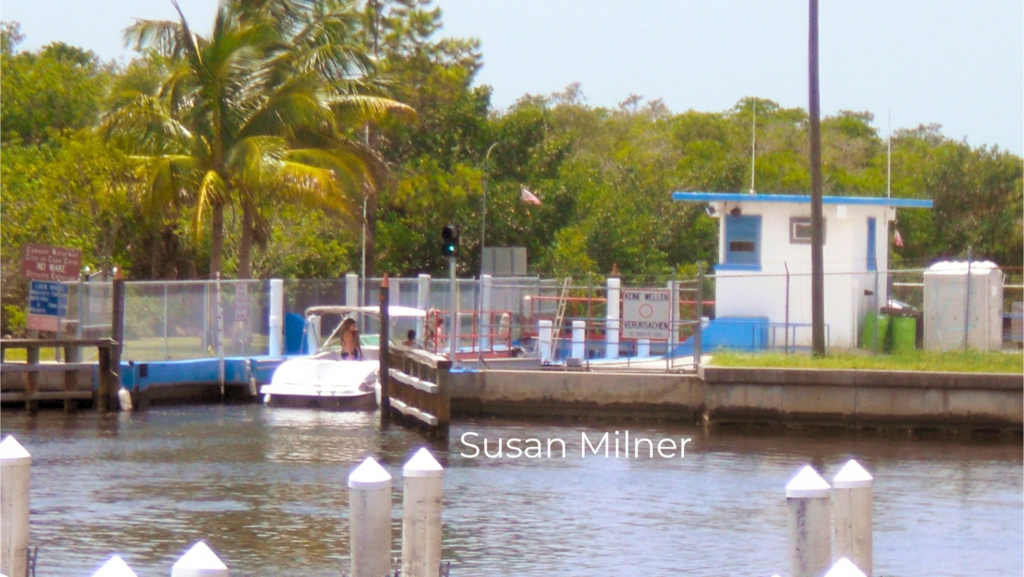
Here’s what the Lock looked like circa 2012
The Lock Was Finally Removed in 2025
The final removal project began in 2025.
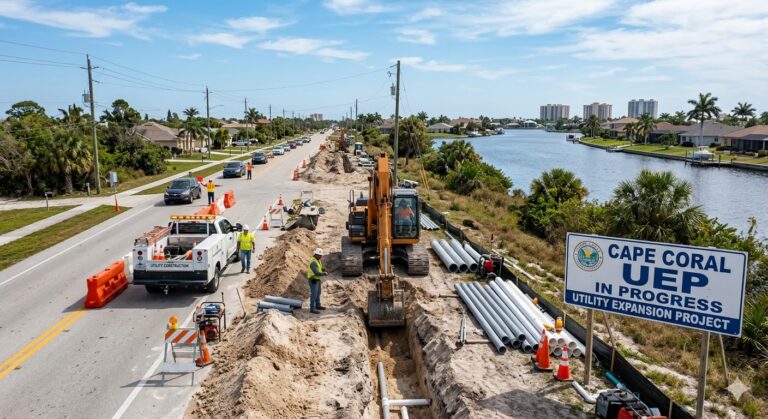
During construction, boating through the area was temporarily closed while crews removed the structure, dredged the channel and completed related seawall work.
On June 17, 2025, the City announced that the removal had been completed ahead of schedule and that dredging equipment and turbidity barriers had been removed.
Then on July 25, 2025, the City held an “Unblock the Lock” celebration and ribbon cutting at the former lock site.
So this is no longer one of those:
“They’re talking about removing it someday…”
stories.
The Chiquita Lock is gone.
What Changed for Cape Coral Boaters?
The biggest change is pretty simple:
Boats can now travel through the former lock location without actually having to go through a lock.
That removes an old bottleneck for waterfront homeowners using this part of the South Spreader system.
The City says the change provides uninterrupted access toward the Caloosahatchee River and Gulf of Mexico/America and reduces congestion associated with the former structure.
For a lot of Southwest Cape boaters, that’s a meaningful improvement.
See What It Looks Like Now
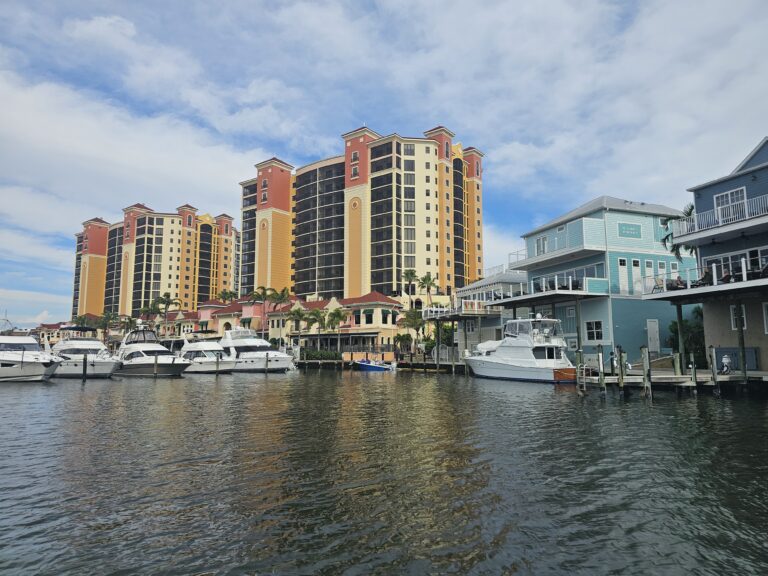
I stopped by Cape Harbour after the lock was removed so you can actually see what the waterway looks like today.
In the video, I’m standing right near the former lock location while boats are moving freely through the opening.
As I explained while I was there:
“Here we are in Cape Harbour in Southwest Cape Coral…and the lock is gone. Boats are flowing freely through the opening now.”
From this area, boaters can continue south past areas such as Tarpon Point and toward Sanibel and the Gulf, while the South Spreader continues north around Cape Harbour and serves many Southwest Cape Coral waterfront neighborhoods.
For many homes feeding into that canal system, one of the old chokepoints in the boating route is simply no longer there.
But Lock-Free Does Not Mean Obstacle-Free
This is an important one if you’re looking at Gulf-access homes.
Removing the Chiquita Lock does not mean every waterfront home in this part of Cape Coral suddenly has the exact same boating access.
Your actual route still depends on the individual property.
Things like:
- Bridge height
- Canal width
- Canal depth
- Distance to open water
- No-wake zones
- Boat size
- Location within the canal system
still matter.
So if you see “Gulf access” in a listing, don’t assume that tells you the whole story.
It doesn’t.
Two Gulf-access homes can provide very different boating experiences.
Does Removing the Lock Make Nearby Homes More Valuable?
This is probably the first real estate question people ask.
And I would be careful about saying:
“The lock is gone, so every house behind it is now worth more.”
Real estate doesn’t work quite that neatly.
But removing a boating obstacle can absolutely change how buyers perceive a location.
Someone who previously didn’t want to wait at a lock every time they took the boat out may now look more favorably at homes feeding into this portion of the South Spreader.
That potentially broadens the buyer pool.
At the same time, waterfront values in Cape Coral are still influenced by many other things:
- Boating time to the river
- Bridge restrictions
- Canal width
- Intersecting canal or basin views
- Seawall condition
- Dock and boat lift
- Flood zone and elevation
- Home condition
- Neighborhood
- Overall real estate market
So I see the removal as one meaningful improvement to the boating experience, not some magic switch that determines the value of every nearby property.
What About Water Quality and the Environment?
This is where the story gets more complicated.
The removal of the Chiquita Lock was controversial.
Environmental concerns were a major part of the debate because the lock’s original purpose was tied to limiting pollution entering surrounding waters.
The City’s position has been that removal could be paired with broader environmental improvements through its South Spreader Waterway Enhancement Project.
Those efforts include:
- Planting more than 3,000 mangrove seedlings
- Installing oyster reef balls
- Improving tidal flow and water circulation
- Reducing nitrogen loads into Matlacha Pass
- Water-quality and habitat work
- Additional canal and environmental monitoring
The City’s 2026 budget documents show that mangrove planting continued after the removal, with more than 1,000 already planted during volunteer events in 2025 and additional habitat work still underway.
So the project wasn’t simply:
remove lock…walk away.
Environmental restoration and monitoring are part of the larger plan.
Why Was the Lock There in the First Place?
The Chiquita Lock was originally installed decades ago as part of environmental mitigation related to Cape Coral’s extensive canal system.
The South Spreader itself forms part of the western edge of developed Cape Coral and runs alongside environmentally sensitive areas.
The lock was intended to help control water leaving the canal system and reduce pollutants entering surrounding estuarine waters.
But the lock eventually became old, damaged and increasingly controversial.
Hurricane Ian further damaged the structure in 2022, and it remained stuck open for an extended period.
City officials later cited environmental monitoring conducted while it remained open as part of the basis for pursuing permanent removal.
How Much Did the Chiquita Lock Removal Cost?
City financial reporting lists the project at approximately $3.6 million.
That work included more than simply knocking out the old lock.
The broader project involved dredging, seawall restoration and environmental improvements associated with the South Spreader Waterway.
What Does This Mean If You’re Buying a Gulf-Access Home in Cape Coral?
This is where I think this story becomes especially useful for buyers.
Cape Coral does not have just one kind of Gulf access.
You’ll see “Gulf access” written on all kinds of listings, but the boating experience can be dramatically different depending on where that property actually sits.
One house might have:
- No bridges
- A wide canal
- A quick route toward open water
Another could have:
- Multiple bridges
- Lower bridge clearance
- Narrower canals
- A much longer boating route
The Chiquita Lock used to be another factor we had to explain for certain properties.
Now that factor is gone.
But the others still matter.
That’s why when one of my buyers says:
“I want Gulf access.”
My next question usually isn’t just:
“What’s your budget?”
It’s also:
“What kind of boat do you have…or plan to have?”
Because that can completely change which Cape Coral properties make sense for you.
I Went Down to See It for Myself
I’ve lived in Cape Coral long enough to remember when conversations about removing the Chiquita Lock felt like one of those things people might debate forever.
So when it actually happened, of course I had to go see it.
Standing there at Cape Harbour and watching boats move freely through an opening where the lock used to be was pretty wild.
For longtime Cape Coral boaters, it’s a major change.
And for buyers moving here now?
A few years from now, many of them probably won’t even realize there used to be a lock there unless someone tells them.
That’s one of the reasons I like keeping these local articles updated.
Cape Coral changes.
The local knowledge that mattered five years ago—or sometimes even last year—may not be the same information a buyer needs today.
Thinking About Buying a Waterfront Home in Cape Coral?
The removal of the Chiquita Lock is good news for many boaters, but it’s still only one piece of choosing the right waterfront property.
If you’re comparing Cape Coral Gulf-access homes, our agents can help you understand the things that actually affect your boating lifestyle:
- Bridge clearance
- Gulf access
- Boating route and distance
- Canal width
- Seawalls
- Docks and lifts
- Flood considerations
- Neighborhood location
- And of course…the house itself
We don’t expect you to memorize Cape Coral’s canal system before buying here.
That’s what we’re here for.
239.542.8521 to reach one of our agents now – or click over to our WhyCapeCoral.com site to search for homes now – Maybe Gulf Access Homes for Sale
Florida Future Realty
Waterway conditions, depths, bridge clearances, permitting and environmental programs can change. Buyers should independently verify access and suitability for their particular vessel and property.